
Omnichannel intake
Capture requests from supported calls, forms, email or manual service channels.
Connect intake, customer context, routing, work, SLA, notifications and service insight in one accountable operating model.
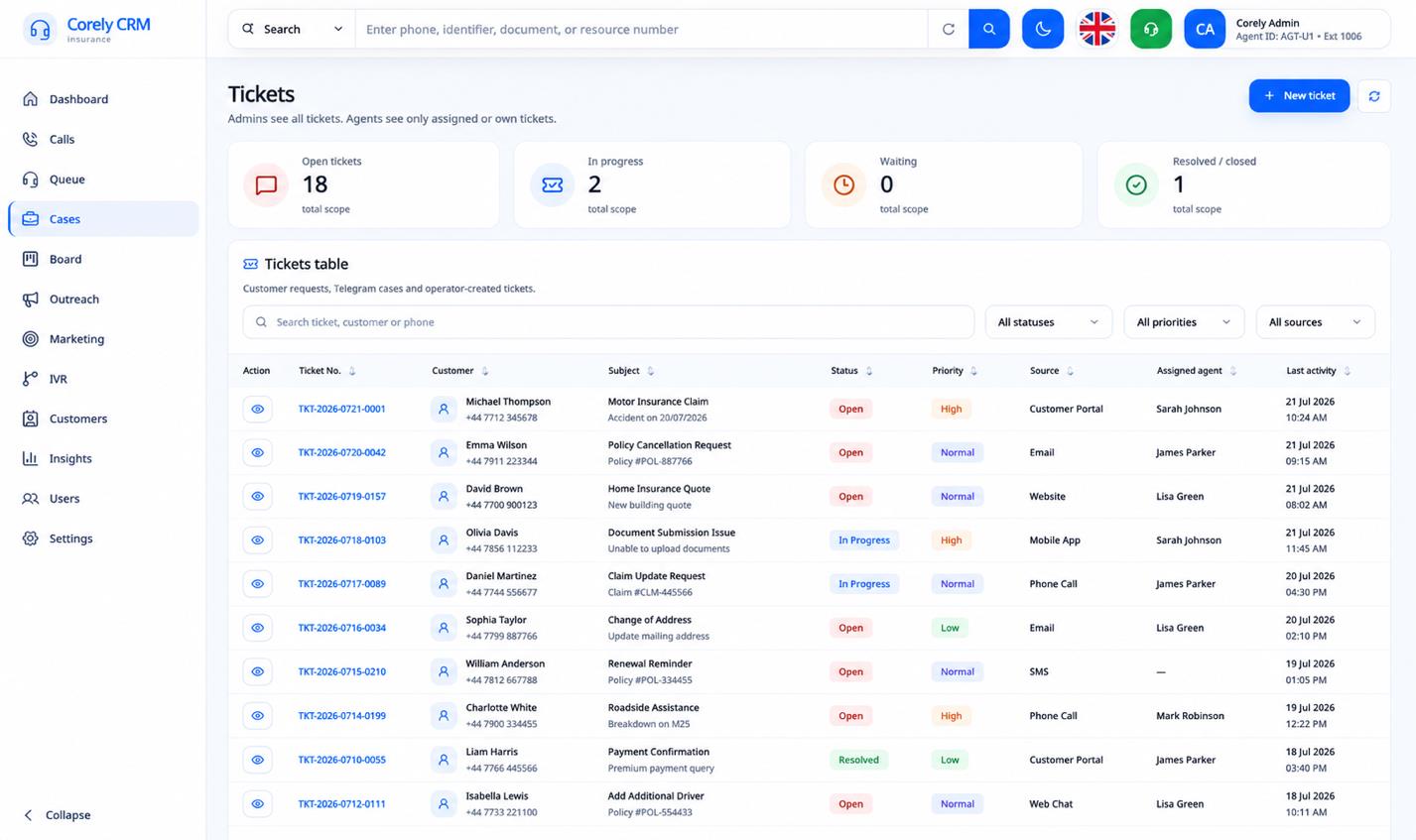
Each capability stays connected to customer context, ownership and the rest of the platform.
Capture requests from supported calls, forms, email or manual service channels.
Apply contact reason, priority, owner, department and SLA rules.
Coordinate tasks, comments, documents, approvals and internal handoffs.
Keep people informed as status changes through configured channels.
Help agents find consistent answers and next steps from approved content.
Measure demand, response, resolution, escalation and feedback where configured.
Receive the request and preserve the originating interaction.
Identify customer, reason, urgency and the correct service path.
Route work, track SLA and involve the right teams and approvals.
Close the loop, notify the customer and learn from the outcome.
Insurance enquiries, complaints, document requests and operational service cases can share one governed model while retaining industry-specific steps.
Explore the integration approachDirect answers, with availability and integration dependencies kept explicit.
Cases can be created from configured channels and routed by reason, priority, stage, department or other available attributes.
Yes where those channels are connected. The implementation defines how identity, consent, attachments and ownership are handled for each source.
A portal or status experience can be provided when that self-service capability is included in the agreed release and deployment scope.
Yes. Corely can operate as a complete customer operations platform or connect selected products to existing CRM, ERP, telephony, BI and collaboration systems. The exact integration path is confirmed during discovery.
Use a focused Discovery Workshop to map systems, users, data, workflows, deployment and the first measurable release.