
CRM
Connect customer identity, context and outcomes through a supported path.
Use confirmed connectors, APIs, webhooks and project integrations while keeping system ownership and data direction explicit.
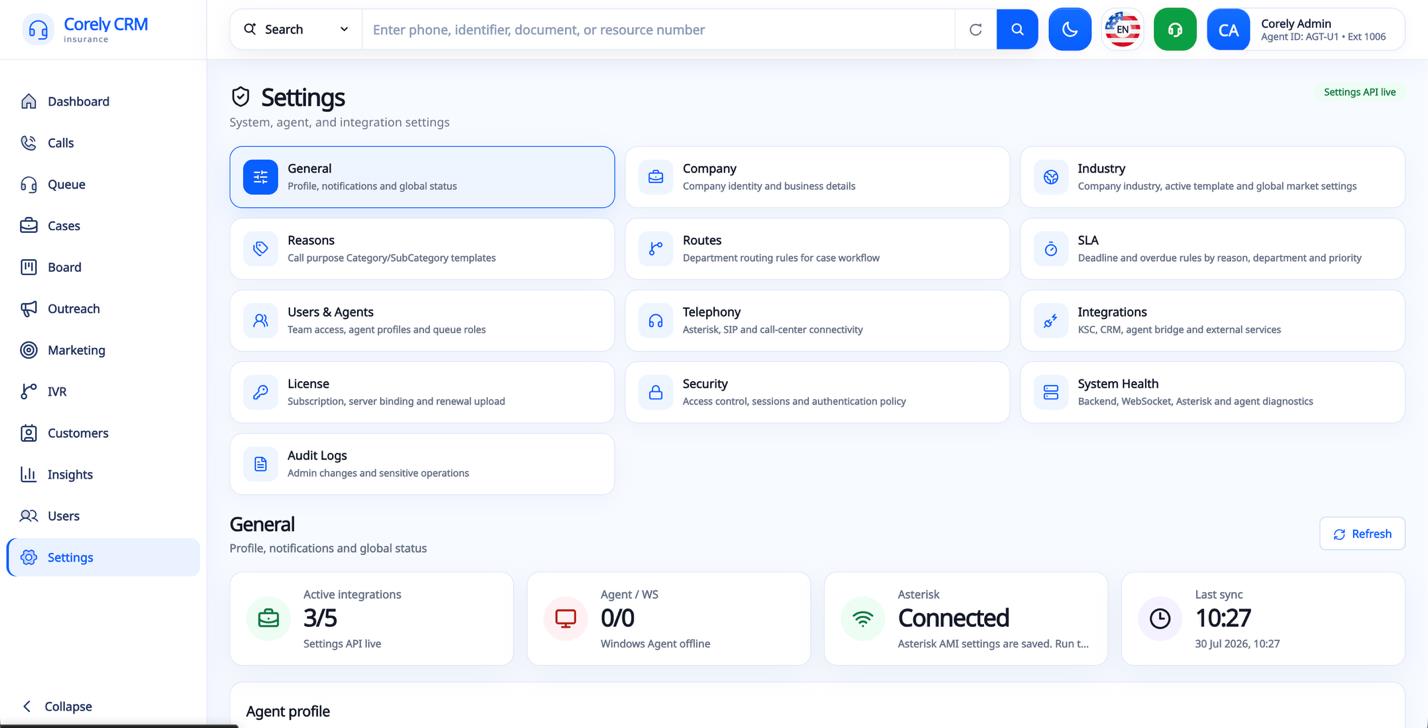
Each capability stays connected to customer context, ownership and the rest of the platform.
Connect customer identity, context and outcomes through a supported path.
Use approved account, product, order or operational data without duplicating system ownership.
Support Asterisk, SIP and project telephony according to the deployed architecture.
Bring approved sources into reporting or deliver governed data to existing BI.
Connect external tools only where the authentication and action model is supported.
Use documented authentication, versions, errors and event patterns.
Identify the system of record, data owner and business purpose.
Use a confirmed connector, API, webhook or scoped project integration.
Apply authentication, permissions, validation, retries and monitoring.
Record status, prerequisites, version and the last verified date.
Corely distinguishes native or confirmed integrations from project-based, API-enabled and roadmap concepts. A familiar logo is not evidence of a supported connector.
Explore the integration approachDirect answers, with availability and integration dependencies kept explicit.
Only integrations that have been tested and supported are labelled native or confirmed. Others are described as API, project integration or roadmap.
Yes where a supported connector or project API path exists. The Discovery Workshop defines customer identity, data ownership and write-back rules.
Webhooks can support approved event patterns where authentication, signature validation, retries and monitoring are implemented.
Product scope, integrations, deployment requirements and release status are validated during a Discovery Workshop. Capabilities that depend on configuration, customer infrastructure or a controlled release are identified clearly before implementation.
Use a focused Discovery Workshop to map systems, users, data, workflows, deployment and the first measurable release.